Bunker Bunch


The owners, staff, and frequent customers at The AR Bunker (www.thearbunker.com) are avid shooters and gun enthusiasts. Collectively, we have decades of active participation in various corners of the shooting sports genre, as well as Military and Law Enforcement experience and training. This makes us uniquely qualified to form valid opinions on the products offered at the store. We believe these opinions and product information might be helpful to those who might read them here and/or might provide food for further thought/research on possible future purchases. So; we’ll be offering “informed” opinions and product information here from time to time.

Monday, August 1, 2016

Sig Sauer P320


Where’s the hammer?  What’s going to activate the firing pin?  This is really radical!  Since the days of the flintlock, there’s been something that falls onto a mechanism to ignite the gunpowder.

Among our group of pistoliers there is a definite prejudice toward hammer fired pistols, even in this modern age of “plastic fantastic” handguns.  We’ve been dragged, kicking and screaming, into the world of polymer framed guns, finally admitting that they work well enough and provide a means of less expensively crafting advanced ergonomics into guns that would otherwise leave lots to be desired. Even so, we still prefer wheelies or “old school” semi’s for our paper punching range work. We still believe that John Moses Browning was a more important figure in engineering legend than the Wright Brothers or Henry Ford - right up there with Willis Carrier, who invented air conditioning.

That having been said, we decided to give a close look at a striker-fired pistol about which we’ve been hearing good things lately; to see for ourselves.  If the Sig Sauer corporate propaganda is to be believed, there’s no reason for anyone to buy any other pistol than the P320.  Safety, accuracy, reliability, durability, adaptability, ergonomics, maintenance, and price all favor the Sig - or so they say.  Well … , at least some of this is true.

Safety - Considerations for deployment of a handgun to members of a law enforcement or military organization require them to be as “idiot proof” as possible. We don’t mean to imply that members of these organizations are less than stellar in the brainpower category but mass deployment of any mechanical system to a group of humans requires consideration of the possibility of error. Even though these groups of operators are exposed to an exponentially larger amount of training that John Q. Public, the incidence of “accidental” or “negligent” discharge in everyday use is high enough that the possibility of operator error needs to be engineered out of the product to the extent possible. Sig has gone to extra lengths in this area with the P320.  If you claim a discharge to be accidental instead of negligent - especially during routine maintenance - you’d better have a really good story or be able to prove a defect in the gun’s system or someone is going to call BS on you pretty quick. “The gun went off by itself” just ain’t gonna work with the 320, and you don’t have to activate the damn trigger to get the gun apart. A full explanation of the safety features is available at www.sigsauer.com

Maintenance - If you know about Sig’s P250 you already know a lot about the 320. The “modular” concept is practically identical. A simple but true phrase is: “The 320 is a striker-fired 250.” No tools are required for disassembly. This is a fairly common feature today but Sig takes the concept a big step further by allowing even the “trigger group” to be easily removed from the frame without tools or special skills. This allows all moving parts in the frame assembly to be removed for easy cleaning and the process is both quick and mentally painless.

The barrel/slide/firing block assembly is a conventional semi-auto design, allowing the barrel to be removed for easy cleaning of the removable parts.  The trigger group is a “cassette” design, with all the little pins, parts, springs, and levers contained in one assembly, which is easily removed from the grip frame for “washing” as a unit.  This allows for much more thorough cleaning than pistols in which these parts remain in place in the frame except for removal by a qualified armorer. This is unique in the industry today.

Ergonomics - The “compact” grip frame mounted on the pistol we tested fit all of our hands well enough and “really great” on a couple of them, so chances are a consumer would find the pistol on display suitable for his/her needs.  If not, each of the four pistol sizes (full, carry, compact, and subcompact) is available in variations of girth for a completely custom fit. It is even possible to buy an extra grip frame (at relatively low cost) for sharing the pistol with someone whose hand is a different size/shape because the grip frame does not contain the gun’s serial number and is, therefore, simply an accessory. This could also be handy for someone who wants a larger pistol for range/practice work and a smaller one for concealed carry.

With all these variations available, the P320 that is a perfect fit for any one consumer is available without the necessity of aftermarket ($$$) purchases. With a slide-lock lever on both sides, and the ability to reverse the magazine-release button, the P320 is ambidextrous (except for the ejection port).

The other items that affect overall ergonomic suitability have benefitted from Sig’s experience in fitting large organizations with members of various sizes and shapes, so the shape and texture of the trigger, placement of the trigger guard, sight design, trigger pull feel, etc. are well engineered for the man/machine interface.

Shooting - First impression of the 320 as we took it out for our test session was excellent ergonomics.  The one we shot was the “compact” model. Because our group consists of widely varying hand sizes and finger lengths, few guns feel entirely comfortable to all of us but this gun worked exceptionally well for everyone who participated in the tests. Not perfect, mind you, but a good enough fit for all that there was not a single complaint in the “grip fit” category.

Accuracy - This is not the kind of pistol any of us would pick to employ as a 25 or 50 yard marksmanship piece. We have “hair trigger” revolvers with much longer sight radius and highly tuned semi-autos that put very tightly grouped holes in paper. The P320 just ain’t that kind of gun. Surprisingly, however, the first few shots each of us took with it all rang the 8” steel a high percentage of times in our “get acquainted” strings of fairly rapid fire at personal defense distances. Raised eyebrows and wide smiles were the order of the day as each of us emptied our first magazine. Our subjective initial feel of the gun was collectively; “easy to shoot accurately.”

Reliability - We tried several different types of ammo at times during the session; from our own cast lead handloads to FMJ factory loads, which also varied widely in power (combination of bullet weight and muzzle velocity). Everything we fed it operated flawlessly and shot to point of aim. This was not a surprise because the design of the barrel/slide assembly is quite similar to other Sig Sauer semi-autos, differing only in the area which houses the firing pin (striker mechanism in this case). Based on our knowledge of the Sig design and extensive experience with the company’s various models, our somewhat educated prediction is that the P320 will not detract from Sig’s excellent reputation for reliability.

Conclusion - We do not favor striker-fired pistols.  None of us currently owns one, although we shoot a wide variety of them regularly enough in testing of repair or modification work done in the shop. It’s not that we actively dislike the design or find it lacking in utilitarian ways, nor would we recommend against it for other consumers. We just prefer the more conventional designs for our style of shooting. That having been said, the P320 was a bit of a pleasant revelation to us.  Our common conclusion was; “if I were going to buy a striker-fired pistol, this would be the one.

Respectfully Submitted
The Bunker Bunch
August, 2016

As usual, we solicit your constructive comments or suggestions. Thank you for your visit.

Wednesday, July 20, 2016

Ruger Security Six


Ruger introduced the Security-Six and its variants in 1972 and the series enjoyed a long production life, ending in 1988.  This was Ruger’s first attempt at double action revolvers and was aimed at the military, police, and civilian defense markets. The design of the Security-Six and its siblings; the Speed-Six and the Service-Six, was intentionally robust with large, heavy-duty parts for durability.  The series enjoyed quite a sales success commercially and was deployed by various Federal government agencies, military units, and numerous Police departments in the U.S., as well as plentiful foreign sales. The GP100 replaced the Security-Six in the Ruger lineup.

The -Six variants were mostly identical in basic design, with minor differences in sights (fixed or adjustable), barrel lengths, and frame shape (round or square butt).  Albeit still a medium-framed size, the -Six series was significantly more robust in many ways than its Colt and S&W competitors. The early production models were all blued carbon steel but stainless steel versions of all models began to see production in 1975.

An important Ruger innovation for its time introduced with the -Six series was a simplified and straightforward disassembly process, which required no tools except a flat-head screwdriver for grip panel removal. This, together with its coil hammer spring design makes thorough routine maintenance easier and quicker than competitive guns of the era.

The -Six series was produced in multiple calibers, including: 357 Magnum (capable of 357mag and 38spl), 38 Special (only), 38 S&W (British 380-200), and 9mm Luger (utilizing a moon clip).

We got our hands on a 1980 vintage Security Six trade-in that was in excellent aesthetic and mechanical condition - aside from a mangled spring inside the rear sight which was easily replaced. Testing and sight regulation protocols following the repair yielded an opportunity to put the gun through its paces at the range, dredging up a bit of nostalgia for some of our bunch who owned or coveted one “back in the day.”  Ruger had been developing some exceptional innovations in its manufacturing process in those days, many of which have become “standard” these days in the production of high quality firearms across the industry. Instead of skimping on materials and workmanship in the production process to reduce costs, Ruger found a method of cost control that actually increased reliability and durability at the same time. Consequently, its entry into the double action revolver market paved the way for a rise to the forefront of this genre.

There’s nothing really extraordinary or “sexy” about the -Six when compared to today’s guns in the same genre. Its ergonomics result in a great fit for shooters with medium-to-small hands, allowing them to better handle the powerful .357 Mag cartridge.  While the gun is no “lightweight” it is still small enough (snub-nose models, at least) to be easily concealed and, with a proper holster, can be carried very comfortably. Compared to the ultra-light, ultra-small revolvers on the market today, shooting the snubby version of the -Six leaves one feeling like he/she’s handling a “real gun” instead of the “plastic toy” feel of the modern crop.

Results of our test firing yielded no surprises - rugged, accurate, reliable. The old Ruger feels substantial when in use and puts bullets on target with a minimum expenditure of shooter skills.  Our resident marksman had no trouble producing a 1” 5-shot group at 10 yards (offhand) with our benchmark ammo, and the rest of us turned in performances as good as we normally do with any of our high-quality revolvers. The gun is easy to shoot well with no “warts” that need a work-around.

Conclusion:  Ruger made A LOT of these guns during the 16 year production run, so finding one on the used market should not pose much of a problem, and the large quantity means that the price should be relatively reasonable.  Given that there is no medium frame, 6 shot, short barrel revolver available today except a new GP100 that would cost at least twice as much, one who appreciates high quality in a “service” revolver could become an owner of a “-Six” for a lot less money.

Respectfully Submitted
The Bunker Bunch
July, 2016

As always, your constructive comments and suggestions are welcome.

P.S. -- July 21, 2016

Shortly after we published the article above one of our bunch brought out his personal Security Six with factory target grips - as shown in the picture below.


The extra beef in these grip panels made the gun easier to handle for those of us with larger hands and made target shooting a bit more pleasant.  While true that these grip panels do not enhance the gun for every day carry or concealment purposes, they are definately a + for range duty.

This version also had a longer barrel than the one we tested before, so the additional sight radius helped those of us with “eyes of a geezer” to get better target scores.  We don’t believe the increased barrel length adds much, if anything, to the mechanical accuracy of the gun but, in the words of a wise old pistolier; “there’s no substitute for sight radius when trying to throw lead at small circles.”

This range session confirmed our earlier opinion of the -Six; that it is a wonderful old gun and a great value on the market today.

Wednesday, July 13, 2016

Reloading


So you’re thinking about taking up reloading (also called hand loading), which is the process of building ammunition up from its component parts. Today’s ammo prices are at historic highs and sometimes we experience shortages of some calibers.  Reloading seems to be the answer to those important factors for many shooters.  There are plenty of considerations that go into the decision to start down the path. I’ve made most of the mistakes and enjoyed most of the pleasures of building ammo, so I thought I’d give you the benefit of my experience while you ponder your decision.

Safety - First and Foremost!  Know this!  If you decide to get into reloading or bullet casting, you owe it to yourself and your family to learn well and observe strictly the safety rules of these endeavors.  Like so many things in the shooting sports genre, the process is completely safe if all the rules are respected.  Take a few shortcuts or fail to learn the rules and disaster of the most serious variety will one day make you very regretful -- or maybe even very dead.

There are a lot of logical and illogical reasons to make your own ammo.  It’s almost never a good idea to think you can make some to sell “on the side” or give away to any but your closest friends.  I’ll get into that later, but please remove those from consideration right now.  Reducing your cost of shooting is valid in some circumstances but is not as good a justification as it might seem, even given the lofty price of “store bought” ammo these days. Quality of the product, in excess of “factory” ammo is a lofty and attainable goal but is not as easy to achieve as one might think. Some reasons that might not have occurred to you are; reloading is an enjoyable pastime/hobby, adequate supply of ammo for personal use is more controllable, and pursuit of quality cartridges is gratifyingly educational and can enhance your overall shooting experience.

This isn’t going to tell you how to make great ammo at home but it might help you with the question of if you should even try.

So, let's go through the facets of the discussion and I’ll tell you what I learned on my journey into the swamp of boolits, brass, primers and powder.  Lets define some terms first, so we’re on the same page together. A piece of handgun, rifle, or shotgun ammunition (cartridge) is made up of several basic components. Bullet (some of us like to call them boolits) -- the metal object that is pushed out of the cartridge and down the barrel by rapidly burning gunpowder (it does not, technically speaking, explode). Brass - a metallic canister typically formed of brass  - but also sometimes made of aluminum or steel - is the container which holds all of the components in place. Powder -- gunpowder, a powdery or flaky chemical substance which burns very rapidly once it is ignited. Primer -- a small, button-shaped, metallic object installed in the base of the brass which ignites the powder when the gun’s firing pin strikes it. So, if I have a bullet, a piece of brass, a primer, some gunpowder, and some tools, I can make a cartridge to fire in my gun. It’s not rocket science but, done safely, it does require the right tools and some education.

Time Out -- for a moment to address one of my pet peeves. We don't call the fully assembled product a bullet.  It’s a cartridge, dammit!  A bullet is only one piece of the total ammunition package - a metal projectile which is tossed downrange while the remainder of the cartridge is either retained in the gun for manual removal or ejected from a semi-auto as a part of the firing process.

Cost
Most everyone who gets into reloading thinks or talks about ammo cost as a primary - or at least a major - factor.  With my setup, I can build a box of 50 cartridges in the 357 S&W Magnum caliber for as little as $4.00.  Yep, a completely safe and relatively accurate .357 mag cartridge for about 20% of what I’d pay at the gun shop, internet or big box store. This $4 figure is achieved partly by using a boolit that I cast myself from scrap “lead” I get for free, while using store-bought boolits raises the cost by about $5 per box - or more.  The $4 figure also assumes I’m using brass (spent cases) I pick up at the range after they’re discarded by other shooters. If I have to buy brass, either used or new (aka virgin) the cost will go up by another $5 to $10 per box, depending on the caliber.

A 50-round box of fairly decent quality 9mm Luger can be had for something around $12 these days; cheaper if you get it on the internet in a 1,000 round batch.  The $4 minimum cost mentioned above is still valid for this caliber, so the saving is smaller, but still significant assuming the use of used brass and homemade boolits. If you have to resort to virgin brass and “factory” bullets (for those who want to shoot mostly/only jacketed bullets, the cost differential becomes very small.

Some consideration, therefore, should be given to which calibers and components will be reloaded to determine if the cost saving is really a factor. Cost saving amounts of “insignificant” to “enormous” are possible and depend on many factors, some of which are unknowable at the time of the initial decision. Most reloaders, myself included, would advise against starting the project if cost saving is the only or main reason - unless you shoot a helluva lot of ammo on a regular basis.

We haven’t discussed the cost of the tooling necessary for the job. Costs here vary greatly and depend on many factors, such as how much labor-saving you want, how much equipment quality you’re willing to pay for, the quality of the tools themselves and the quality of the ammo produced, etc.  Acquisition of a proper setup doesn’t stop with a press and a set of dies, either.  There is a myriad of $5, $10, and $20 accessories that you’ll probably decide you “have to have” once you’ve started wading into the pool on the shallow end. High quality ammunition can be made with an inexpensive single-stage press and some budget dies ($300 for the total package), but that arrangement requires a lot more operator time and a quality control protocol than, for instance, a professional-grade progressive press with all the appropriate accessories ($1,000 or more).

As with guns, the first set of tools will probably only lead to another “upgrade” but starting with the basics allows you to spend a smaller amount while learning enough about the subject to decide intelligently what you really want or need.  Remember also, that absorbing the cost of the equipment into each box of ammo produced is going to take a lot more time if you shoot 100 rounds a month, than if you shoot 500 a week.  Make out a spreadsheet and do the math; you might find that gun store ammo is cheaper for you than reloading your own.

Ammo Quality
Manufacturers of ammunition produce a very wide variety of products aimed at various segments of the shooting population.  Long range marksmanship, long range hunting, rifle, pistol, shotgun, plinking, self defense, and casual target shooting are but a few of the specific purposes for which ammunition of a given caliber can be tailored. Many very serious competitive marksmen make their own ammo simply because they can’t get the quality or consistency they demand for their specific niche from “over the counter” sources.  Most folks who reload don’t go to those extremes of quality assurance, but higher quality ammo than the internet or gun store’s “budget brands” is fairly easy to produce at home.

A $12 box of 9mm ammo from any of the current list of manufacturers is a compromise of several factors because the producer has no way of knowing how the consumer will use its product. Those compromises, and to the extent they are applied, result in a product that is acceptable (albeit sometimes marginally) for a wide range of uses but excellent for none.  Since most of us shooters spend the majority, or maybe the entirety, of our time engaged in one type of shooting per caliber it would be easy for us to tailor our ammo to fit our use.  In making our own ammo our choice of powder, boolits, brass, and primers can be combined, with some experience and testing, to produce a cartridge vastly better for our chosen purpose than the $12 box, or even most of the more expensive products.

Because we can build better quality ammo does that mean that we will; or even should? Again, this depends on what kind of shooter we are and what kind of shooting we do.  If you’ve gotten this far into reading this little epistle you’re most likely more than a 50-round-per-month shooter.  You’re at least serious about the sport, if not an outright enthusiast. Still, if you’re not driven to, and capable of, producing ever smaller groups on paper, and shoot more than a box of ammo twice a month, you should probably stick to store bought.  One proviso, however - if you seriously want to get a lot better at shooting and know that practice is what it takes to get there, reloading can help a lot with that mission because of the cost and quality of the ammo it takes to do that much practice.  Yes, you can get high quality ammo, engineered for a specific purpose, at the store but that drives the price way up; and buying a lot of ultra-cheap crap over the internet will disappoint once you realize that the quality of ammo has more to do with your shooting success than you ever imagined.

As A Hobby In Itself
Reloading is a manufacturing process that produces a product necessary to feed our shooting endeavors. Seldom, however, do reloaders see themselves simply as a laborer in a manufacturing process. We gain varying degrees of satisfaction and/or enjoyment from the time spent at the reloading bench.

… A great way to spend some time doing something constructive.
Reloading can eat up a lot of time.  Yeah, we hear stories about how someone’s setup is capable of turning out 600 rounds per hour but those are special situations.  The typical reloader spends a heck of a lot more time than that in the production of high quality specialized ammo, which requires painstaking attention to detail. Not many of us are in the game for mass production - we think of our setup more as an artist’s brush than a cookie cutter.

All that having been said, a couple of hours utilizing a well designed setup can produce enough high quality ammo for a competitive match or range session with the guys. This is, of course, after all the education and practice is behind you and you know what you’re doing; and remember that safety thing - no shortcuts here.

….. Working with your hands while challenging your mind.
One of the reasons many of us choose to spend time at the reloading bench is that we are challenged by the very complicated science of ballistics.  If you’re not a trained ballistics expert you probably have no idea how complicated handgun and rifle ammunition design happens to be. Choosing a powder and bullet size/shape/composition for a given cartridge is barely scratching the surface in the effort to produce ammo that best fits a particular need, let alone one that will adequately fit several needs.

Within limits, of course, a functional cartridge can be made from a variety of bullet lengths and diameters; perhaps as many as 10 or 20 combinations.  The best 9mm combination for a Glock 19 will most likely not be the best for a Beretta 92, even though both are built to spec for the “9mm Luger” caliber. This is because Glock and Beretta make barrels of differing bore diameters and the design of the rifling in their barrels is different.  Both will put holes in a “center mass” target from 7 yards pretty consistently with almost any commercial ammo, but getting a 2” 5-shot group from 25 yards will absolutely require ammo customized for the particular gun.

The myriad of component combinations provides an opportunity to fine-tune ammunition to fit your needs more precisely.

Supply problems
From time to time ammunition - either ammo in general or that of a particular caliber - becomes hard to find and/or ridiculously expensive.  These episodes are nothing new, although the rumors about causes of the problems seem to be getting more imaginative and rooted in paranoia. Empirical evidence seems to confirm, however, that upward price mobility always follows these temporary shortages.

Each of us active shooters prepares for these situations in different ways. It’s a wisdom born of pain.  Stockpiling or hoarding ammo of the caliber we shoot the most if one way of ensuring a personal supply against the possibility of shortages or rocketing prices. A prudent amount of “inventory expansion” - as I like to call it - entails quite a few decisions, however; any of which can easily be wrong -  leading to a waste of a lot of money. I once bought a buttload (yes, buttload is actually a real unit of measurement - albeit not currently in common use) of 9mm ammo and found later that the quality was not all that great, its suitability for my purposes was questionable, and the shortage I expected never happened.  I’ll eventually shoot it all (if I live long enough) but I could have put that money to better use if I’d made a better decision.

Reloading is a better way to prepare for shortages.  Having on hand a reasonable inventory of components allows me to produce a variety of ammo on more of an “as needed” basis to meet my particular - and changing - shooting needs. Sure, I keep an adequate supply of loaded ammo in the calibers and load varieties I shoot regularly, but I don’t have to keep an excess on hand to combat potential supply and price problems. A particular powder, for instance, can be used effectively for assorted loads in several calibers. Some boolits, even, can be used in different calibers. A stockpile of only 2 sizes of primers will cover virtually ALL handgun ammo.

Reloading components are not immune from occasional shortages and price increases but these events - when they do occur - seem to be of less frequency, intensity and shorter duration than for loaded ammo.

Ballistic Science
If you’re in the pilot's seat, pulling back on the stick will make the airplane go up and pushing forward on it will make the airplane go down, but that’s not enough education to qualify you as a 747 Captain.  The boolit comes out of the pointy end of the gun when your booger hook yanks on the trigger, but that’s not enough education to qualify you as a shooter.  In both of these “tongue in cheek” examples additional education is required to make you safe and a great deal more is required to make you even marginally “good at it.”

How you grip the gun, how you manipulate the trigger, how you view the sights, breathing control, your shooting stance, etc. are all factors in how effectively you can put the boolit on its mark. The extent to which we learn and execute the proper application of those, and other, basics of gun control also affects the amount of enjoyment and/or satisfaction we get from a range session or, God forbid, how successful we might be in a personal defense event.

Utilizing a decent quality gun and “store bought” ammo,  mastery of the shooting basics is achievable for most of us - given a reasonable amount of practice. Advanced education and a lot more practice can make some of us into much better than average shooters. If you throw good eyesight, talent, and desire into the mix a champion marksman or competitor might emerge. At this highest level, however, special guns and ammo are required because the personal skills of the operator have exceeded the capability of “production” guns and “consumer grade” ammunition.

As we strive to improve our shooting skills, education and experience with the science of ballistics can help by making us more aware of the various aspects of firearm operation. Reloading can provide an excellent and enjoyable means to acquire some or a lot of this knowledge as a very positive side effect. Combinations of boolit size/shape/weight and the type and amount of powder in a given caliber is almost unlimited. Each different combination will yield a dramatic or insignificant difference in the way a boolit will exit the muzzle and fly to the target. These variations have much more effect on the flight of the boolit than most shooters realize. Most combinations will not be good, some will be acceptable, and a few will provide excellent results - in terms of making a small group of holes at the appropriate place on the target. By controlling the variables in the construction of the ammo, we can learn about and control the ballistics of our shooting. The process is - concurrently - enjoyable, educational, and productive.

Don’t sell your reloads
Gun manufacturers typically insert language in the warranty that voids it if “reloads” are used.  There is a good reason for this.  “Store bought” ammo is guaranteed by its manufacturer (well, the vast majority of it is) to meet industry standards for various specifications. Ammo within these standards will not cause damage or excessive wear to a gun or its operator.  Since an individual reloader may not even know or have access to these standards, it is entirely possible the reloaded ammo might not comply. Ammunition manufacturers spend considerable sums of money on equipment and procedures to control the quality of their product. The level of quality assurance in Bubba’s workshop may or may not be high enough to prohibit a destructive event when the firing pin engages the primer.

For these and other reasons, reloads have a tarnished reputation among casual shooters, and especially those that know little or nothing about the reloading process.  I don’t feel insulted at all when a shooter declines to shoot reloads in his gun because there are plenty of true stories of Bubba's ammo blowing up his friend’s Glock. No, I’m not Bubba and I have absolutely no fear of my own ammo but that’s because I know how much care I put into my process and I have only myself to blame if I make a mistake.

So, Bubba is an excellent shooter and extremely sober, careful reloader.  He uses quality equipment and keeps it in good condition. He uses high quality components and matches them with proven recipes known to work safely in the gun involved.  Bubba is, however, a human and, as such, is capable of an innocent mistake.  Bubba’s mistake finds its way into Marcel’s Glock and it blows up in the Marcel’s face. Marcel’s widow is convinced by a shyster that the Court will award her Bubba’s house, bass boat, and pickup truck.  Bubba’s troubles are enormous no matter the final outcome.  All Bubba was trying to do was recoup the cost of his reloading components and a favor for his shooting buddy, Marcel.  It wasn’t worth it.  Keep your reloads to yourself.

Safety is the first and final word
In the aviation business we used to say; “Flying is 99.9% sheer boredom, punctuated by 0.1% stark terror.”  Thousands of commercial flights travel millions of miles with millions of passengers EVERY DAY without a single injury or fatality because the industry keeps safety as Job 1. I’ve loaded thousands of rounds of ammo in my workshop without a serious incident. Even the one minor “Oops” event I can remember in my shop was contained to that category, instead of escalating into an “Oh shit!”, because of adherence to established safety guidelines.

Safety is not free, and it can sometimes be inconvenient. Some safety protocols may even seem unnecessary or “that’s for pansies.” If you’re not willing to pay for and strictly adhere to the safety rules, please don’t get into reloading. It just ain’t worth the risk.

Respectfully Submitted
The Bunker Bunch
July, 2016

Wednesday, July 6, 2016

Ruger GP100

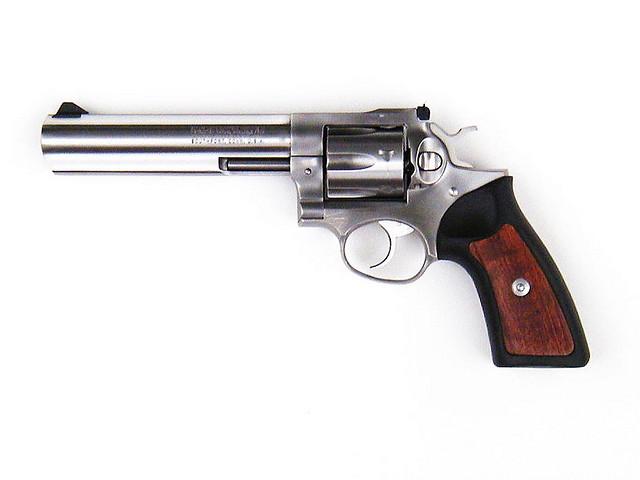
Sturm, Ruger & Co. has, over the years, made some of America’s finest handguns – revolvers included. In contrast to many of its competitors, Ruger has consistently improved the design quality of its product and customer service and is among the best in the industry in these categories. Lacking a longer tradition of wheel gun manufacturing from the 19th century, the company’s guns are better known for their robust construction, durability, and high quality “fit ‘n finish” than for their adherence to “traditional” design.  The GP100 is a prime example of this characterization of Ruger’s mission.
Once available only in the powerful .357 Smith & Wesson Magnum (357 mag) caliber but recently also offered in .22 Long Rifle (22lr), the GP100 is built like a tank but has a very stylish appearance. Like most other 357 mag guns, the GP will fire .38 Smith & Wesson Special (38 spl) ammo just fine. Unlike some of its competitors, however, which give up some of their accuracy when 38 spl is used, the GP manages to retain its great accuracy with the shorter 38 spl cartridge. This isn’t such a big thing for those who re-load their own cartridges and can make “downloaded” 357 mag ammo which produces the same (or even less) felt recoil as the milder 38 spl.  For those who buy “store-bought” ammo, however, the cost and felt recoil of shooting 38 spl is significantly lower and the comparable accuracy (38 spl vs. 357 mag) of the GP is a very big plus in this situation.
The GP100’s cylinder has 6 chambers in 357 mag (10 for the 22 lr) and is a double action (D/A) revolver, meaning a pull of the trigger will advance the cylinder and cock the hammer if it is not already cocked, prior to letting the hammer fall.  It can also be operated in single action (S/A) mode, where a trigger pull allows the cocked hammer to fall.  For personal defense, the D/A option provides a safe condition for carry because of a safety feature called the “transfer bar,” which prevents the hammer from igniting a primer unless the trigger is activated - even with an extreme blow to the back of the hammer, as in getting dropped directly onto the protruding hammer spur.  Inclusion of the transfer bar allows the GP100 to be carried with the hammer down on a loaded chamber without fear of unintentional discharge.
The GP100 is a bit “beefy” in comparison to similar sized revolvers -- both contemporary counterparts and historical examples of handguns in this class.  This gives it a look, feel, and reality of strength and endurance but does not endear it to those who would use it as a daily carried personal defense weapon.  With the right holster, however, as with slightly lighter revolvers of yesteryear, there’s no reason not to consider it for such duty.  Many law enforcement officers have walked around their entire career with such a “six-gun” strapped to their waist, and the GP adds the enhancement of powerful 357 firepower to that situation.  Given that 357 mag ballistic energy rivals that of the .45 ACP, deployment of the 357 mag in a defense situations gives up very little in terms of “knock-down” power or round capacity in comparison.
The GP100 comes with a fiber optic front sight and an adjustable rear sight in both 357 and 22 models.  The adjustable rear is a “must” for target shooters and allows fine tuning the gun to a shooter’s personal shooting style rather than the shooter having to adapt to the gun.  It also allows any shooter to become as accurate as possible with far less practice than guns with fixed sighting systems. Some “luddite” (tongue firmly in cheek) marksmen do not prefer the fiber optic front sight but this can be easily changed to something more traditional.
Ruger produces the GP100 in several variations, including differences in caliber, finish, and barrel length.  There are also "distributor exclusives" that add various upgrades desireable to some shooters. The Bunker Bunch has been using a stainless 357 mag 6" version for some time now and it is one of our two "go to" guns for testing 357 mag and 38 spl ammo.  We've just recently acquired a 22 lr model and will be reviewing both here.
Both of our GP100's are used exclusively at the range for target shooting. We use neither as a "self defense" (carry gun) nor a "home defense" (available around the house for intruder defense) gun. To meet our use, we've enhanced our 357 mag version to have a VERY light, crisp, and smooth single action trigger pull. This is desirable for us shooters to get as much accuracy from the gun as we are capable of imparting through the "man/machine" interface.  We would never use a gun with this kind of trigger feel in a defense situation where extra adrenaline might make for an "twitchy trigger finger."  The 22 lr version is new enough that we've not yet made that upgrade but we'll do so shortly - after a reasonable break-in period - and, after modification, we expect the trigger feel to be virtually the same on both guns.

The size and shape of the two versions of the same model are not identical. Barrel length, etc. are different, but the overall package is matched ergonomically so that the balance and general "feel" of the gun in hand are extremely close.  The "grip frame" is interchangeable and the mechanical design (if not the actual size of the parts) is the same. The 357 mag version comes in both "blued" and stainless models and is available in several barrel lengths.  The 22 lr version is, currently, available only in stainless and only with a 5.5" barrel.


Product descriptions are available at: http://www.ruger.com/products/gp100/models.html
Both of our guns came equipped with the very nice looking and moderately ergonomic rubber grip with wood insert panels as shown in the above picture.  Our preference, generally, for marksmanship exercises with revolvers is the Hogue rubber finger-groove grip and we've installed that one on our 357 mag.  The 22 lr will get that grip when we do the trigger enhancement.


Ruger revolvers have quite a reputation among wheel gun pistoliers for their robust construction (especially the Super Redhawk) and the GP100 is no exception.  We put a lot of rounds through our range guns and we have no fear of ever wearing out a Ruger.  While we don't make a habit of firing "full boat" maximum pressure loads at extended range sessions, we always drag out the Ruger when testing those kinds of loads because we’re confident the GP will not be adversely affected even if one is inadvertently slightly "overloaded."  We’d never knowingly fire a grossly overloaded cartridge but there's plenty of "beef" built into these guns, especially in the dimensions of the cylinder bore and frame dimensions, where ammunition ignition stresses are brought to bear.


Our experience with the 22 lr version is not yet extensive enough to form a solid opinion of its accuracy capability.  We are, however, favorably impressed with its performance so far and are cautiously optimistic that it will attain a ranking in this category as high as our highly prized S&W Model 17s (aka K22).


In conclusion; we’ve found the GP100 in 357 mag to be one of our most favored revolvers, and expect the 22 lr version to be a similarly valued addition to the stable.  Its inherent accuracy and ergonomics make it easier to shoot accurately than many others. With the proper ammo, this is a gun that’s just plain fun to shoot all day long.

Respectfully Submitted
The Bunker Bunch
July, 2016

Saturday, June 11, 2016

S&W22 Victory


Contrary to normal practice in the firearms industry, the Smith & Wesson SW22 Victory became widely available for consumer purchase soon after its initial public announcement - instead of the lengthy marketing run up normally allocated to the process of new product launch.  We saw this gun at a dealer show in early January and two showed up at our local shop - The AR Bunker - a few days later.  All of us wanted to shoot this beauty the minute we laid hands on it at the show but we couldn’t agree on which of us would actually make the purchase, so a few days of good-natured bickering finally produced a volunteer.

The Victory is, among its other virtues, an extremely ergonomic pistol.  Our small band of pistoliers consists of shooters with a wide variety of hand sizes and shapes, so there is no handgun that is “perfect” for all of us.  The Victory is no exception but it comes as close to the mark as any we’ve tested in a long while. It gets scores of “very good” or “excellent” from all of us, with more of the latter than the former. One of us even deemed it “a perfect fit.” The grip shape is wide where it needs to be wide and thin where it needs to be thin.  The bottom of the backstrap is nicely curved forward to prevent it from digging in at the bottom of the palm of the strong hand. Trigger placement is a nice compromise of fore and aft, which, along with its carefully crafted shape, accommodates both long and short fingered shooters.

Standard equipment includes front and rear fiber optic sights and the rear sight is fully adjustable for elevation and windage.  While many target shooting champions do not favor fiber optic sights, these are not so bright that they distract from the sight picture, but do aid in quick acquisition.  A picatinny rail mount is included with the purchase package and can be easily installed in lieu of the rear sight for those who might want to mount a red dot or other optic instead of the “iron sights.” Magazines are 10-round capacity and S&W also includes an extra - which is almost unheard of these days with new 22 pistols.

Stainless steel is found throughout. Frame, barrel, receiver, and bolt are all stainless, lending weight and durability to the gun.  The Victory is not a dedicated, high-end target pistol like it’s S&W 41 cousin (which costs almost three times as much) nor is it a lightweight utility/plinker/varmint shooter, but it is suitable for either use while its cost is much closer to the latter than the former.  The plentiful use of stainless steel provides the weight necessary for accurate target shooting and the ruggedness that withstands shuffling around in a backpack or other outdoor recreational activities.

Take down (field stripping) does require a tool but it is a common allen wrench which is included with purchase and is the only tool required. Once one screw is removed, the entire upper assembly - consisting of the receiver, barrel, and bolt - disconnects from the frame and this simple process reveals all that is necessary for routine cleaning.  Further disassembly of parts in the bolt and receiver - for those more mechanically inclined or experienced - are also very straightforward with common tools, making more detailed maintenance easy to perform.

Putting the Victory through its paces at the range was a real eye-opener.  As much as we all liked the looks of this pistol, appreciated its weight and balance, and admired its design and engineering, we were doubtful that S&W could pull off a “real winner” for the target shooter at this price point.  We thought; “there must be a wart or two somewhere on this princess.” After about 50 rounds each we were all smiles, with astonished comments flowing freely between us. Quickly throwing a few rounds at a steel target from 25 yards let us know that some serious accuracy would be available from this chunk of silver delight.

The trigger is not a “world class” contraption as would be found in competition pistols costing $1,500 or $2,500, breaking like a glass rod, and tripping the sear at 2.5 lbs of pull weight.  It is, however, more than competent for the kind of serious marksmanship practiced by mere mortals. Combined with the overall ergonomics of the pistol, its trigger will not prevent the average shooter from reaching his/her full accuracy potential.  Said another way, the Victory’s trigger will allow a “fair-to-middlin” shooter to achieve tighter groups. For those that know the terms, there is a small amount of take-up, followed by a very small amount of creep, and then the break is very crisp.  There is also an over-travel adjustment for those who want to tweak it.

3” to 4” inch groups, at 25 yards, freehand, with bulk ammo were achieved on our first outing with the Victory. Feeding the Victory a variety of inexpensive bulk ammo, we had no failures to feed or fire attributable to the gun. It even functioned perfectly with subsonic ammo, which chokes many pistols not fitted with a suppressor. Our experience on the first outing leads us to expect some very pleasant results when we get to test the beast again after some more break-in and with some premium ammo from a bench rest.

In summary, this gun is an ideal balance between design, engineering, and ergonomics.  Form does not give way to function, nor vice versa.  Our examination (2 of our group are highly qualified gunsmiths) revealed a high level of build quality and no obvious design features that would predict failure.  The design is simple and straightforward.  Rube Goldberg was definitely NOT invited to this party, and his absence portends long life and reliability for the pistol.  Parts and materials seem to be of very high quality and build quality is as good as we’ve seen in modern firearms.

The SW22 Victory belongs in a class with the Ruger Mk III and the Browning Buckmark, at least in terms of build quality, reliability, and ruggedness and is every bit as good as those other two; but is a better pistol out of the box as a target shooting competitor. (Way better than the Ruger in terms of ease-of-maintenance).  So, it ain’t a S&W 41 nor a Hammerli Xesse but it also ain’t $1,300 and most shooters will never achieve the skill level necessary to justify the extra expense of those high-end models.

Respectfully Submitted
The Bunker Bunch
June, 2016

PS: The SW22 Victory is in stock and available from The AR Bunker.  More info and specs are available from www.smith-wesson.com

Saturday, June 4, 2016

Remington Golden Bullets


The ubiquitous .22lr is, probably, the most popular caliber in use today.  Several factors influence its popularity, including soft recoil, relatively inexpensive ammunition cost, and vast number of firearms owned which are chambered for the cartridge. The expansive number of shooters who employ the “22” for recreational purposes (plinking at tin cans, varmint hunting, casual marksmanship, etc.) mostly seek inexpensive ways to pursue their efforts, and the Remington 22 Golden Bullet HP (GB) has become very popular among this crowd. Frequently, perusal of .22lr ammo at one’s local sporting goods store or gun shop will result in the GB having the lowest price among the selection available.  Also, availability of the GB seems to be among the most consistent in today’s tight supply environment.

Among more serious rimfire operators the GB has a (mostly undeserved, as we shall propose here) reputation for low quality and reliability.  During some serious, objective tests, our little band of pistoliers found this notoriety to be mostly false; or at least greatly exaggerated. Make no mistake, this epistle is NOT intended to imply the GB is a high quality product.  It is not in the same league with the match grade .22lr ammo on the market in terms of accuracy, consistency or reliability.  So, it is not, deservedly, the first choice of marksmen who place great value on reliability of ignition and ultimate accuracy from a given firearm. Neither, not surprisingly, does the price of the GB reside in the lofty heights of that “match grade” ammo.

Accuracy
Choice of ammunition has a greater effect on where a bullet will impact a target than most shooters realize.  Shooter skill, ammunition quality, and firearm quality - in that order - are the most important factors in placing bullets close to an intended point of impact. A shooter with minimal-to-moderate skills cannot expect to dramatically improve his/her performance by buying expensive guns and ammo.  For someone, however, who has excellent shooting skills and a firearm proven to be capable of exploiting them, choice of ammunition can dramatically decrease the size of a bullet impact group on a paper target, or the chance of delivering a first shot deadly blow to a game animal.

Our extensive experience with all kinds of shooting, especially rimfire, dictates the use of a much higher quality ammo than the GB when we’re engaged in serious competition.  When we’re just practicing trigger control or some other facet of shooting, where very tight groups are nice but not essential, the GB - and other “budget” products - provide excellent choices for minimizing the cost of that kind of shooting.  Ammo cost should not deter a marksman from engaging in enough practice to hone his/her skills

Performance
We recently tested several brands/grades of .22lr ammunition to verify the manufacturer’s claims of velocity.  Included in these tests was the size of impact groups on a paper target at 25 yards.  We did not test longer range results, which would be more impacted by velocity variations and by design and ballistic coefficient of the bullets because that was not the focus of our curiosity.  In our tests, the GB demonstrated muzzle velocities very close to Remington’s claims and a very good consistency of the velocity from shot to shot.  Other things being equal, these results place the product in the “good” category.

While the GB provided Point of Impact (POI) groups about the same as its “budget” competitors, it did fall short of generating the kind of “one ragged hole” performance of the much higher priced “match grade” ammo we included in the tests.  When you can achieve groups of 2” (average) from a pistol, handheld, on a bench rest, at 25 yards, over and over again, you’re a good shooter, your gun is a good one, and your ammo is “decent-to-good.”  This is what we got with the GB.  Admittedly, the “match grade” ammo produced notably smaller groups - as expected.

While we’re at it, we must note that just because a manufacturer claims a product is “match grade” is no guarantee. Neither is price an exact measure of accuracy or consistency capability.  Further research is necessary to determine the true “value” of a particular cartridge.

Reliability
The .22lr cartridge in general is far less reliable than its centerfire cousin.  It’s not the caliber but the ignition method and mass production characteristics that control this more than anything else. There seems to be more of a variation in quality from the various manufacturers in their various products of the same caliber, and there are greater differences in various factors within this caliber among the manufacturers.

When we couple these differences with the fact that “22” semi-auto pistols and rifles are frequently “ammo sensitive” we find that a particular firearm will function more reliably with one brand of ammo over another.  There are pistols and rifles out there that will function perfectly with CCI Mini-Mags but are “spotty” with the GB or the Federal Champion (Federal’s budget offering), and some guns work well no matter what they’re fed - but that’s a topic for another article.

The GB does not function perfectly in all semi-autos, although there are plenty of popular guns out there that “like” it as well as anything else.  Neither do the “budget” products from other manufacturers. So, in terms of semi-auto function, a particular gun will “like” some ammo and not others.  It’s a crapshoot, and the GB is not more to be scorned than others in its category.

Also, an occasional misfire (failure of the primer to ignite the powder charge) might be a nuisance, but the degree to which a particular shooter will find it offensive is very subjective and varies widely.  Some will endure the inconvenience in exchange for lower cost while others will pay a higher cost to eliminate the irritation. Also, in serious marksmanship competition a failure to fire or feed is more important than when pushing a tin can along the ground at the range for fun with one's buddies.

When we eliminate the “semi-auto malfunction” variable from the question by testing with revolvers, we can more accurately evaluate the “ignition quality” of the GB and others.  Among our small group of pistoliers, several are very serious shooters.  Any malfunction experienced - no matter the casual nature of the particular shooting exercise - demands an immediate detailed inspection and diagnosis of the problem.  For these folks, failure to hit the bullseye or produce a small group can be acceptably excused if it’s “fog on my glasses” or “too much caffeine this morning” but a firearm related or ammo related malfunction is cause for much distress. Since we have to rely on manufacturers for our .22lr ammo (we hand load almost all of our centerfire ammo) each of us has a sincere preference.  Even so, budget constraints will keep the $10/box stuff in the range bag unless the friendly casual competition gets intense.

Without objective, data based, testing some of us began to refer to the GB as “Golden Misfire” and began to shun its inclusion in our regular range activities.  For reasons lost in the mists of time, one of us had accumulated a large inventory of GB and was averse to the purchase of a replacement while thousands of rounds of GB remained on the shelf.  So, with plenty of testing fodder available, and a desire to determine if the “Golden Misfire” moniker was undeserved, objective analysis was undertaken.

Using both older stock GB (more than 3 or 4 years old) which had been stored in cool, dry conditions and newer purchases (got a deal too good to pass up) the notorious GB was fired exclusively in several range exercises from a S&W Model 17 (.22lr 6-shot revolver), a Browning Buckmark, and a S&W 22 Victory.  Both of these semi-autos are NOT ammo sensitive, so their impact on the purely “ignition performance” test was not a disqualifying factor. The question, then, became; “How many GB’s can be fired consecutively without an ignition failure?”

Round 1: 76 rounds (77th round failed to ignite).
Round 2: 99 rounds (100th round failed to ignite).

A test protocol of “How many out of 100 will ignite?” would probably have been better but this is what we chose. Together with previous, less formal but still objective, experience shooting lots of GB (due to the massive inventory and Scrooge-like aversion to new purchases), we determined:

Conclusions:
GB will fail to ignite occasionally. Acceptable frequency is subjective.
GB is about as accurate as all but the much higher cost truly match grade ammo.
GB will fail to function some semi-autos but not much more so than its direct competition.
GB velocities (important for hunting) are very close to what’s advertised.
GB provides a decent value in today’s cost environment.
GB does not, in our humble opinion, deserve the “Golden Misfire” reputation.

Respectfully Submitted
The Bunker Bunch
June, 2016

Tuesday, May 24, 2016

The Monsignor MAX


Basic Sig Sauer 1911 MAX

Most shooters don't think immediately of Sig when the discussion turns to the 1911 platform.  Sig Sauer got into the 1911 game a bit late and had some false starts with its early version of the venerable John Moses Browning design but corrected their shortcomings rather quickly, and today's basic Sig 1911 is as good as any production offering; and better than most.

To take it's already good product and tweak it to the max (pun intended), Sig had the captain of it's competitive shooting team, Max Michel, collaborate on the design of a "purpose built" gun for the competitive shooter - IDPA, USPSA, IPSC, and the like - who prefers the 1911 platform.  It also happens to work well for those who don't compete but do appreciate ultra accuracy and maximum ergonomics for marksmanship/bullseye exercises.

See our earlier review of the Sig MAX here:
http://thebunkerbunchblog.blogspot.com/2014/10/sig-1911-max.html

And now we have the "Monsignor MAX"

After putting a few hundred rounds downrange with the pistol just as it was received from Sig, we (The Bunker Bunch) decided it was a real winner but reasoned it could use a bit of trigger tweaking to make it perfect for our purposes.  The unit was spirited off to the secret engineering and customization lair of Monsignor Maddox for a little of his exquisite magic.  When the gun resurfaced from the depths of the wizard's workshop all any of us could say was: "Nirvana!"

Already a familiar number in our range-day repertoire, the MM (Monsignor Max) emerged from its elegantly padded velvet bag at the range to heightened expectations, and we were neither surprised nor disappointed with the result. The Bunker Bunch can be said to be "a tough crowd" when it comes to evaluating handgun performance because we all have enough shooting experience with lots of makes and models to appreciate a gun at the top of its class in a given category. Because we had hyped ourselves with a bit of dry-firing, and all have some experience with the piece prior to its upgrade, a few rounds each enabled us to conclude the session with comments like: "Yep, that's the Ultimate Shooting Machine!  You did a great job with this one, Monsignor."

We didn't set this gun up to be a "service," "every day carry," or "personal defense" weapon.  It is strictly a range gun that we expect to produce a very small group of holes in a paper target, and trigger feel is an extremely important aspect for this type of firearm. The shooter must be able to impart his skills to the gun's mechanism seamlessly and effortlessly if the bullets are to go where they should, and any defect in the design or craftsmanship of the gun imparts some degree of barrier to the perfection of that man-machine interface.

Trigger pull weight was reduced from an already "good" level of something like 4 pounds to an impressive 2.375 pounds; and the trigger reset was reduced to a bare minimum consistent with range safety. Because the Sig MAX is already a very high quality competition piece, our gunsmith didn't have to deal with any of the other sloppy trigger imperfections that are found in most production guns.

Upon intense debriefing, the Monsignor revealed that, in the case of the MAX, Sig had installed some extremely high quality parts from outside sources (e.g. the EGW sear) in areas where they mattered; eliminating the necessity of upgrading certain components to achieve a truly exquisite custom build. A bit of polishing was all that was really necessary to bring out the trigger performance we sought.  Of course, the "bit of polishing" comment is in the context of being spoken by a gunsmith that REALLY knows what he's doing - not one of the 90% who are wannabe hacks and use that use the "gunsmith" moniker all to loosely. Also, that "bit of polishing" has to be applied to just the right spots on just the right parts or it is either unnecessary, counter-productive, or downright dangerous.

If you want the equivalent of a $3 - $4,000 (or more) "custom" 1911 with a truly "wish-off" trigger for a WHOLE LOT LESS, get yourself a Sig 1911 MAX ($1,500 - $1,600 estimated street price) and have the AR Bunker's resident "magician", Monsignor Maddox, upgrade your beauty to his Ultimate Shooting Machine standard.  The dollars you spend on this gun and the upgrade will be the best shooting dollars you've ever - or likely ever will - spend.

Respectfully Submitted;
The Bunker Bunch
May, 2016